
Dr. Howell’s Daily Reflections
Everyday, Dr. Howell writes a reflection, a spiritual practice, an inquiry prompt, and a prayer.
To receive Dr. Howell’s reflections everyday in your inbox, please sign up for our mailing list using the form at the bottom of the page, and begin your journey into who God has made you to be.
Make peace with your ego and discover your true path today. The path to wholeness starts now!

The Inner Critic and the Beloved Part 5
The inner critic does not merely point out our mistakes; it can become the constant soundtrack of our lives. It can whisper in the background of almost everything we do, finding fault with even our best efforts.

The Inner Critic and the Beloved Part 4
The inner critic is the opposite of the beloved. And we can be aware of both of these in ourselves. One of them is our real identity, while the other is a self-regulating mechanism that can harm us.

The Inner Critic and the Beloved Part 3
The word “beloved” sounds like a romantic term in a novel. Indeed, the word is used in many contexts to refer to lovers and romantic relationships.

The Inner Critic and the Beloved Part 2
What is the origin of our inner critic? And why would we carry its self-debasement and hurt with us everywhere? Why have we kept this unpleasant self-talk when it makes us feel so bad, so unworthy? The inner critic has been in us since our early childhood, when we developed it for our survival. It is part of what we call our ego, and we cannot do without it. The basis of the inner critic is the cautionary and punitive communication of our parents. Though their verbal warnings and even shaming were to keep us safe and accepted, we internalized their voices, only to echo them to ourselves. The inner critic is meant to keep us in line but can become a monster that completely distracts us from who we really are: the Beloved.

The Inner Critic and the Beloved Part 1
The inner critic comes to us every day. It points out our shortcomings, deficiencies, and blunders. And regardless of what the Inner critic says, or the particular deficit it brings to our attention, there is an implied message: you are flawed and unacceptable.

Home Part 7
“Make yourself at home.”
We hear those words as guests, often a little unsure of ourselves at first. We don’t want to overstep, to assume too much, to cross invisible lines. But something shifts when the invitation is sincere. Our shoulders drop. We breathe differently. We reach for a glass without asking, settle into a chair, and move about more freely. For some of us it can mean opening the fridge without feeling like we have crossed a boundary. For a moment, what is not ours begins to feel like it could be. Hospitality makes that possible.

Home Part 6
Sometimes, when someone dies, we say, “They’ve gone home to be with Jesus.” It’s a gentle phrase, softer than the blunt finality of “they’re gone,” and far more alive than “rest in peace,” which can feel like an endless, dormancy. “Going home” carries something better. It suggests movement, belonging, and a return, not an ending.
Home Part 5
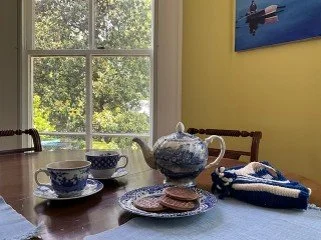
Every so often, only a handful of times a year, I find myself missing home. Not my home now, though I love it and miss it too, if I am away too long. I mean something older, deeper. I miss the kind of nurturance and affirmation that first taught me who I was. It is as a subtle yearning, an emptiness, a longing that’s hard to name, but it is for the warmth that once held me without question.

Home Part 4
My English grandfather spent his life at sea. A merchant officer, he circled the globe through the Suez and Panama Canals, into the ports of Europe, Africa, Australia, New Zealand, South America, and India. The world was his oyster. And yet, after every voyage, he returned home.

Home Part 3
I’ve been out of pocket lately… I have been moving, traveling, staying in motion. There’s a certain energy in that kind of life, but after a while, something subtle begins to slip. Without realizing it, I start to feel untethered… slightly unmoored. Not lost, but not fully grounded either. Something calls me back home.

Home Part 2
I stood at the kitchen window on a bright, sparkling afternoon and saw Lark on the patio, quietly reading, while our two dogs joyfully romped across the yard behind her. Something in the scene settled me instantly. I felt free… content, grounded… safe… at home.

Home Part 1
I stopped recently at the house where I grew up—and at first, I hardly recognized it.
What was once a pristine, newly built neighborhood now feels worn, a little tired, softened by time. The streets no longer gleam. The homes no longer sparkle. Yet beneath that weathering, I could still feel a sense of home. I visited there many years ago, and the owner was there. She invited me to see the house. It was amazing to relive my childhood in one amazing visit. This time, no one was at home, so I took the liberty to walk around some of “my yard.” And all that was home enveloped me again.

What is Mine to Do? Part 7
What is mine to do—when the world feels loud, divided, and uncertain?
Not everything. Not what belongs to others. Just what is mine.

What is Mine to Do? Part 6
There is a saying that makes a lot of sense to me: Live and let live. The saying is old and comes from the Dutch proverb “Leven ende laten leven,” which was recorded as early as 1622 by Gerard de Malynes in his work, The Ancient Law-Merchant. It was later adopted into English as a principle of tolerance in 17th-century merchant philosophy. In general, it means to give others who are different from us a wide berth of acceptance because that creates harmony among us.

What is Mine to Do? Part 5
I cannot change the laws of a nation, but I can change the moment someone stands in front of me.
What is Mine to Do? Part 4
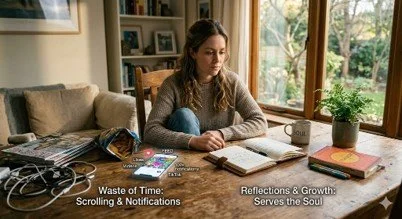
We all keep a “to-do” list. But what we place on that list deserves a closer look.

What is Mine to Do? Part 3
After graduate school, we settled in our new town and became part of a small community. One day, a well-known businessman, raising funds for a local charity, visited me at my office to ask for my donation. He told me the following: “This is a worthy cause, and if you contribute to this charity, it will help pay your 'civic rent.'” In the past, I had been only a student, not a professional in the work community, so I had no idea what “civic rent” meant.

What is Mine to Do? Part 2
How do we know what our specific purpose is? Some of us know it from childhood, others by the teen years, and others in young adulthood. It can be a struggle to find… especially when the ego has its ideas of what our purpose needs to be. I recall being in graduate school and dissatisfied with my course of studies. It was interesting, but it did not touch me at the deepest level.